







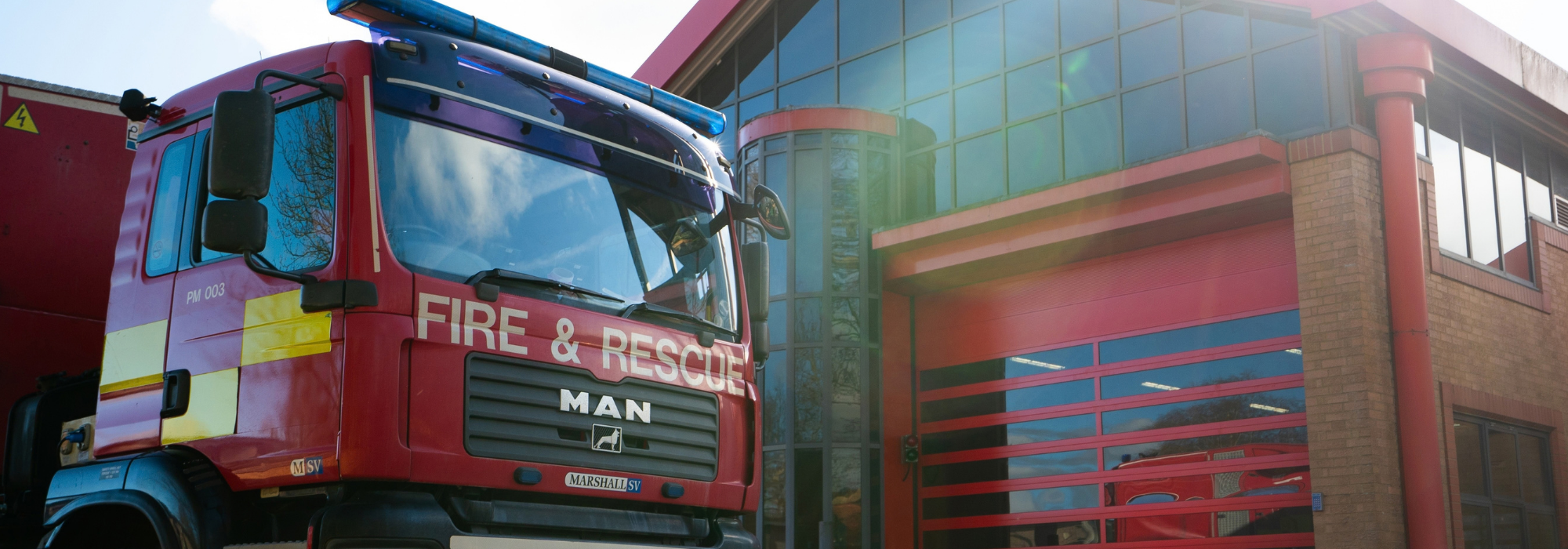
Fire station decarbonisation: a practical route for fire and rescue estates teams
Fire and rescue estates have a particular problem that most public buildings do not. A station cannot close for six weeks while the heating is ripped out. It runs at every hour, in every season, and the appliances have to roll the moment the call comes in. So when the conversation turns to fire station decarbonisation, the honest question is not whether to do it, but how to do it without ever taking a building out of service.
That question has become more pressing in 2026. Two developments have moved estate decarbonisation up the list for fire and rescue authorities, and both give property teams a reason to plan now rather than wait. This guide sets out what has changed, what the work actually involves on an operational estate, and the practical steps to take before the next capital cycle.
Why this matters now
The first change is money, or at least more certainty about it. Government has confirmed a three-year funding settlement for fire and rescue services covering 2026/27 to 2028/29. It puts almost £1.99 billion of core spending power into standalone fire and rescue authorities in 2026/27, up around 4.4% on the year, with a strengthened funding floor, backed by an extra £15 million, guaranteeing every authority at least 3.8% more and protecting that in real terms to 2028/29. By the end of the period, core spending power is up 12.6% on 2025/26. This is general service funding, not a decarbonisation pot. What it buys you is planning certainty, and three years of visibility is enough to plan a phased estate programme against, which single-year settlements never allowed.
The second is structure. The National Fire Chiefs Council has stood up a national decarbonisation programme for the blue-light estate, run through a new Programme Management Office. It provides a shared operating model for identifying, prioritising and funding decarbonisation work, a national dashboard for services that sign up, and a route to consistent technical support rather than every authority solving the same problem alone. For a sector that has carried a decade of estate underinvestment, a common method matters as much as the money.
Behind both sits the fixed point everyone is working towards: the UK's legal commitment to net zero by 2050, with many services setting earlier local targets of their own. Estate heating is one of the largest levers a fire and rescue service has to pull.
The starting point: what the estate is really like
Most fire and rescue estates are a mix of buildings of very different ages. Some stations date back decades, with solid walls, single-glazed sections and gas boilers that have been nursed through more winters than anyone would like. Others are newer and already reasonably efficient. The heating is the headline: a large share of operational stations still run on fossil-fuel heating, and that is where most of the estate's building emissions come from.
This is not a criticism of anyone. It is the practical inheritance of stretched capital budgets, and it is exactly the position from which useful work starts. The buildings that heat poorly and cost the most to run are usually the same buildings where a well-planned retrofit delivers the biggest carbon and running-cost saving. The estate's biggest liabilities are its biggest opportunities.
What fire station decarbonisation actually involves
Decarbonising a station is less about one dramatic swap and more about doing things in the right order. Rush to fit a heat pump into a leaky building and you get a system that struggles and a bill that disappoints. The sequence that works looks like this.
Start with data, not assumptions. A condition and energy survey tells you how each building actually performs, where heat is lost, and which stations should go first. On an estate of mixed ages, this is what stops money going to the wrong roof.
Fabric first. Insulation, draught-proofing and glazing improvements cut the heat a building needs before you decide how to supply it. Do this and the low-carbon heating you fit afterwards can be smaller, cheaper and more effective.
Then low-carbon heat. With demand reduced, heat pumps and other low-carbon systems become a sensible fit rather than a stretch. Electrical capacity is the detail that catches people out: many older stations need a supply upgrade before a heat pump will work, and that lead time needs planning in early.
Bundle it with planned maintenance. The cheapest time to improve a building's fabric or plant is when you are already working on it. A roof due for replacement is a chance to insulate. A boiler at end of life is the moment to change the heat source rather than replace like for like. Treating decarbonisation as a thread through the planned maintenance programme, rather than a separate project, is what makes the numbers work.
Keeping the building running through the work
This is the part that is specific to your world, and it is where a generic retrofit approach falls down. An operational station has to stay operational. That shapes everything: temporary heating and power arranged so crews are never without them, works phased around watches and appliance movements, dust and noise controlled around rest and training areas, and a clear plan for the days when the electrical supply is being upgraded. None of it is exotic, but it has to be designed in from the start by people who understand that the building is a workplace that cannot pause.
This is a shared job. You know your estate, your operational constraints and your local risk. A good maintenance and retrofit partner brings the survey data, the low-carbon engineering and the phasing discipline. The projects that go well are the ones where both sides plan together from the first survey, rather than handing a finished specification over the fence.
Funding the programme
The three-year settlement gives you a planning baseline. The NFCC national programme gives you a method and, for services that join, shared tools and technical support. Beyond that sits the dedicated decarbonisation money. The main route is the Public Sector Decarbonisation Scheme, administered by Salix, which has channelled more than £2 billion into public buildings through successive phases. It grant-funds low-carbon heating and the energy-efficiency and fabric measures that reduce a building's demand: insulation, glazing, LED lighting and similar. It pays for the energy work, not for fire safety or general repairs, so be clear which parts of a station upgrade it can and cannot carry. Windows open and close, so the practical move is to have a costed, prioritised pipeline ready to submit when one appears, rather than starting the survey work after the announcement. A programme that is shovel-ready wins funding that a good intention does not.
What to do next: a short checklist
- Commission or refresh a condition and energy survey across the estate, so decisions rest on data.
- Rank stations by carbon, running cost and condition, and identify the first tranche.
- Check electrical capacity at priority sites early, because supply upgrades have long lead times.
- Map decarbonisation onto the planned maintenance programme so fabric and plant work happen together.
- Build a costed, prioritised pipeline you can put in front of a funding window at short notice.
- Choose a partner who can retrofit an operational building without taking it out of service.
Decarbonising a fire and rescue estate is a long programme, not a single project. Started now, with the funding certainty and the national method that 2026 has brought, it becomes a planned, fundable sequence rather than a scramble. Left until the boilers fail, it becomes reactive, expensive and disruptive to the very buildings that can least afford disruption.
This is the kind of work AXIS CLC delivers for public-sector estates: decarbonisation and capital works planned around buildings that have to keep running, with the surveys, fabric measures and low-carbon heating handled as one programme.
Next step: if you are shaping a decarbonisation programme for your estate, book a call with an AXIS CLC business development colleague to talk through phasing and funding, or read more about our decarbonisation service for the public sector.
Sources:
- NFCC — Fire Chiefs welcome stronger funding settlement (2026): https://nfcc.org.uk/fire-chiefs-welcome-stronger-funding-settlement/
- House of Commons Library — Short guide to government support for fire and rescue services (CDP-2026-0042): https://commonslibrary.parliament.uk/research-briefings/cdp-2026-0042/
- NFCC / BlueLight Commercial — National Decarbonisation Consultancy Services (Programme Management Office and dashboard): https://bluelightcommercial.police.uk/helping-fire/
- Energy Manager Magazine — Faithful+Gould launches 'blue-light' decarbonisation programme with National Fire Chiefs Council: https://www.energymanagermagazine.co.uk/faithfulgould-launches-blue-light-decarbonisation-programme-with-national-fire-chiefs-council/


